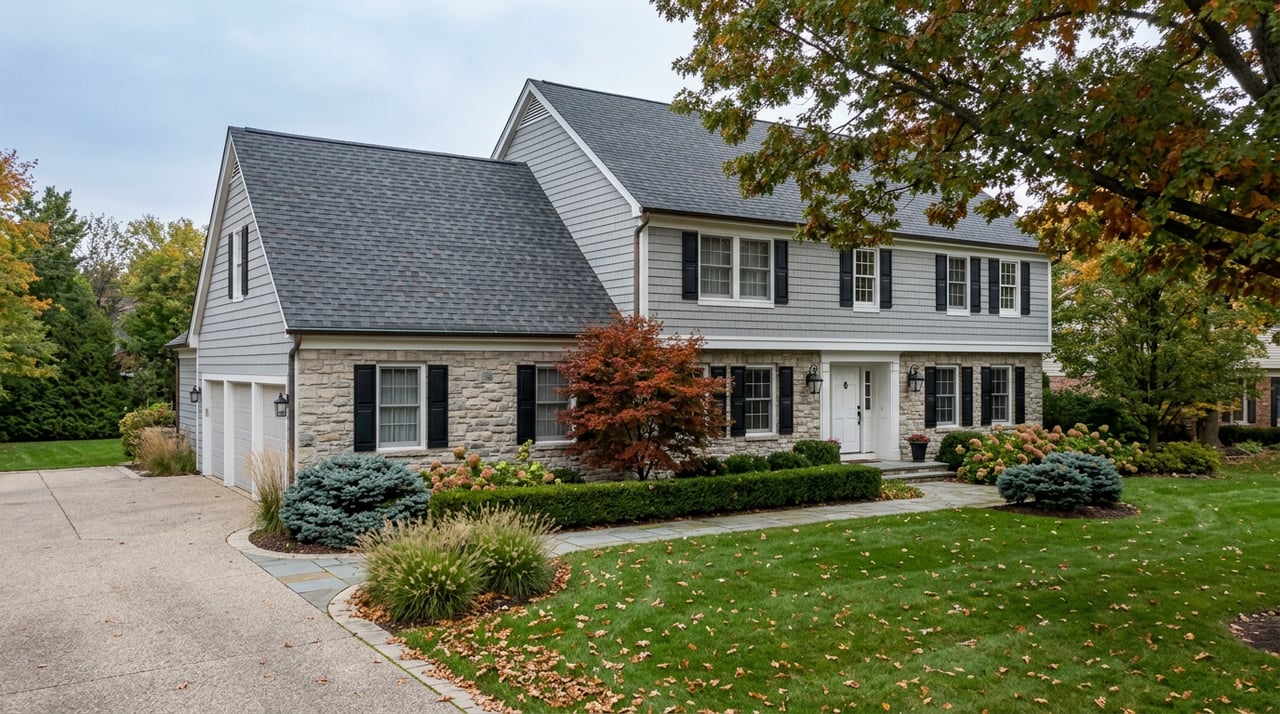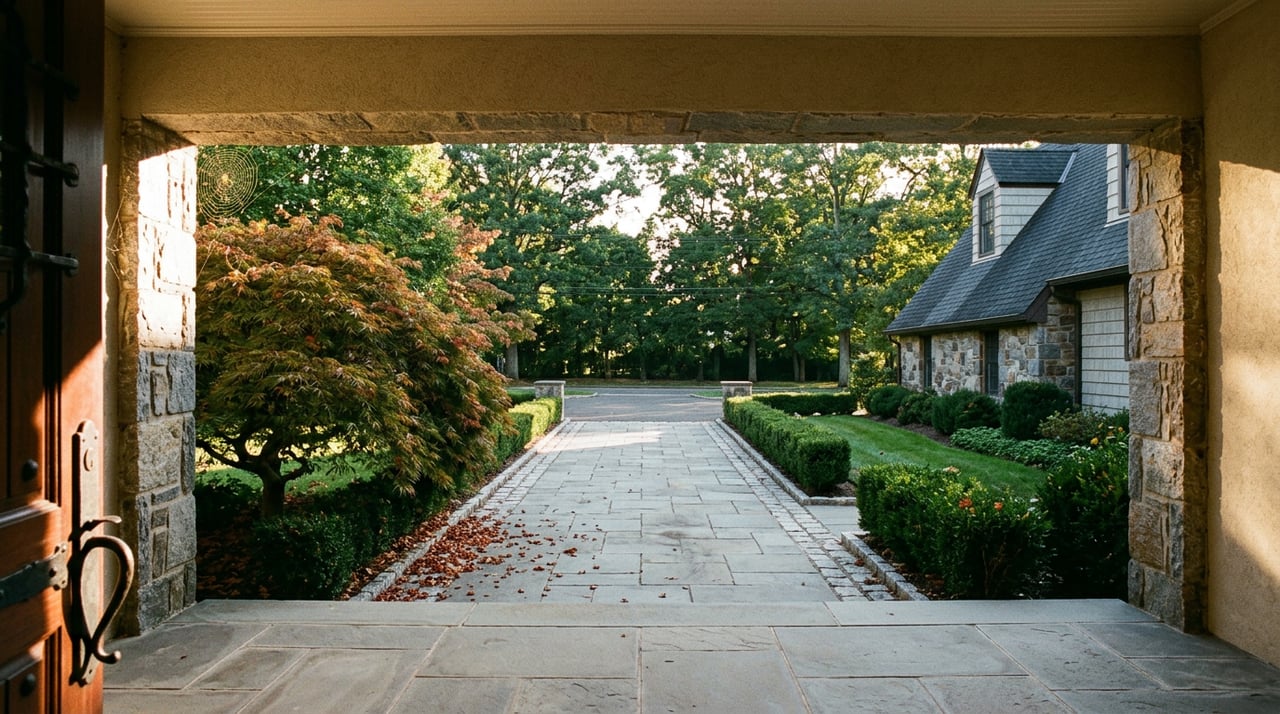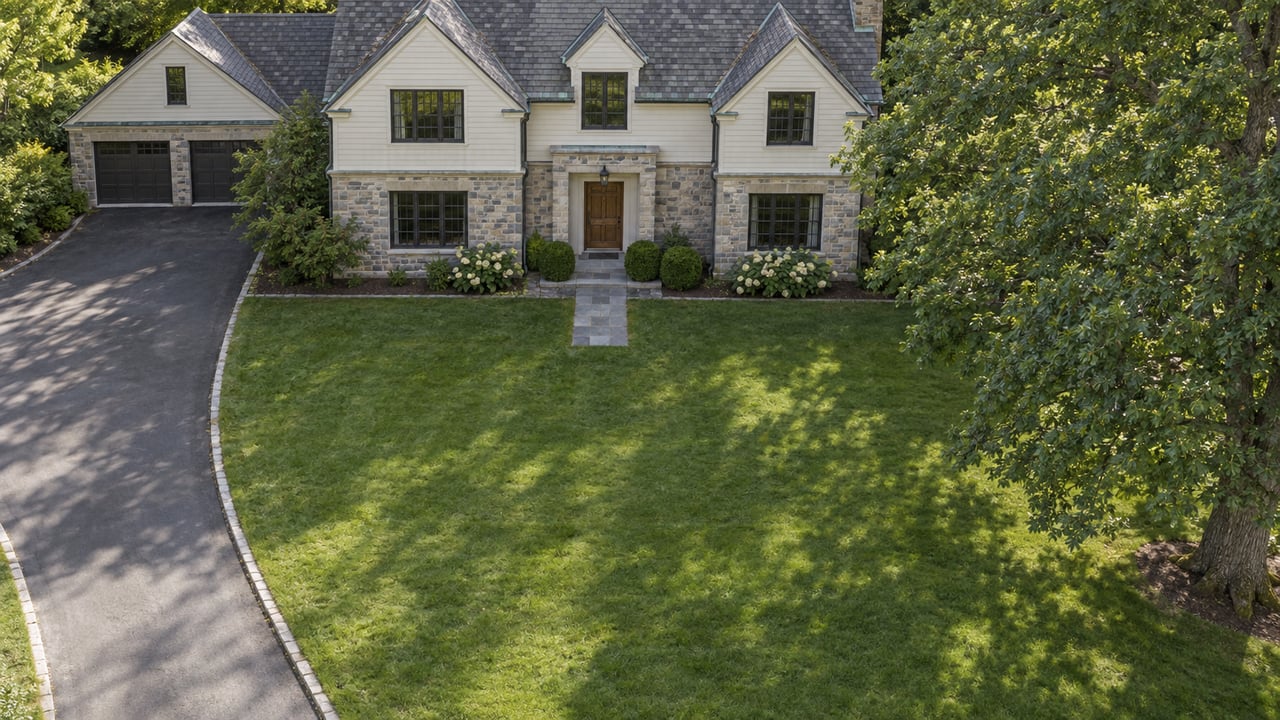
A buyer comparing two listings both labeled Brookville might find one sitting on a lot that only needs to be an acre to build on, and the other requiring five. Same name on the listing sheet. Different rulebook underneath it.
That is not a typo and it is not marketing shorthand. Brookville is actually three separate incorporated villages, each with its own Board of Trustees, its own zoning chapter, and its own idea of how much land a house needs around it. The Village of Brookville, the Village of Old Brookville, and the Village of Upper Brookville sit next to each other on the North Shore, share a name, a Gold Coast history, and a handful of the same country clubs, and diverge completely on the one legal question that actually determines what a piece of land can hold.
Same Name, Three Village Halls
The split goes back to how Gold Coast estate country incorporated. Landowners in different pockets of what had been one loose estate district each petitioned to form their own village government, at different times, for their own reasons. Upper Brookville's name is its own small story: local history holds that the village was originally going to be called Lower Brookville, and a resident named Hope Goddard Iselin, the first woman to crew in an America's Cup race, objected to being told she lived somewhere "lower." The village became Upper Brookville instead.
What that history left behind is three village halls, three planning boards, and three separate zoning codes governing land that a listing description will happily call, generically, "Brookville." The Village of Brookville itself is also home to LIU Post, the largest campus of Long Island University, along with the Tilles Center for the Performing Arts and the Hillwood Art Museum on that same campus. None of that shared geography tells you which village's rulebook applies to a specific parcel.
What the Acreage Minimum Actually Requires
Old Brookville's zoning code sets out three residential districts. R-1A requires a minimum net lot area of one acre, R-2A requires two, and R-3A requires three. Meeting the acreage minimum is only the starting point. The village scales setbacks and lot coverage to the size of the parcel, and corner lots face tighter restrictions because the front setback applies from every street line the lot touches. Site plan review can be triggered by grading, and the village regulates tree removal along with excavation and freshwater wetland activity. A five-acre parcel that looks wide open on paper can still have a modest buildable envelope once those rules are applied.
Upper Brookville runs a different structure entirely. Its R1 district requires two acres and caps a main building at 90,000 cubic feet. Its OP1 district requires five acres and allows up to 150,000 cubic feet, unless the lot is a nonconforming parcel under five acres, in which case the smaller two-acre volume limit applies regardless of the district name on the map. Roofs in Upper Brookville need at least a six-on-twelve pitch, with only a small allowance for flat roof area. Accessory buildings are capped too: 1,000 square feet for a single detached structure in the two-acre district, 1,200 in the five-acre district, with combined totals of 1,600 and 2,000 square feet respectively.
The Village of Brookville proper is generally described as two-acre zoning, the middle ground between its two neighbors' more layered systems. None of these three villages will tell a buyer, from the word "Brookville" alone, which of these applies to a given house.
The School District Doesn't Follow the Village Line Either
Village government and school district are two separate maps, and in the Brookvilles they don't line up cleanly. The Village of Brookville is served in greater part by the Jericho Union Free School District, with a portion instead assigned to the Locust Valley Central School District. Upper Brookville falls under Locust Valley Central. Parts of Old Brookville and Brookville can fall under the North Shore Central School District depending on the specific parcel, not the village boundary as a whole.
That means two houses on the same road, both inside what a listing calls Brookville, can be assigned to different school districts entirely. For a buyer, that is not a footnote. It is a fact that has to be confirmed against the actual tax parcel, not assumed from the village name or the street address, because it will not average out or split the difference the way a price does.
What the Same Three Months Looked Like on Paper
Numbers pulled from the three villages over roughly the same recent window show why treating "Brookville" as one market produces numbers that argue with each other.
| Village | Recent window | Price signal | Volume signal |
|---|---|---|---|
| Brookville | 3 months ending June 2026 | Median sale price $2.5M, down 16.6% year over year | Only 4 homes sold in June 2026; median 167 days on market, up from 127 the year before |
| Old Brookville | July 2026 | Median asking price $2.69M, unchanged from June 2025 and July 2025 | Median 277 days on market |
| Upper Brookville | As of July 31, 2026 | Average home value $2,773,877, up 10.8% year over year | Modeled estimate across the village's full housing stock, not a sale-based median |
The Brookville row is the one worth sitting with. In the same three-month window, the median sale price fell 16.6% year over year while the median price per square foot rose 36.1%. Those two numbers moving in opposite directions inside the same village, inside the same months, are not describing two different trends in the market. They are describing a market too small to average. Four homes selling in a month is not a data set, it is four houses, and if one of those four happened to be an oversized house on an undersized lot, or a smaller house that closed at a premium per square foot, the median and the per-square-foot number will pull apart exactly like this. Old Brookville's asking price sitting flat across two full years reads less like price stability and more like the same thinness, just measured in days on market instead of price direction, with a 277-day median suggesting a handful of listings sitting rather than a market clearing regularly enough to generate a real trend line. Upper Brookville's figure is a modeled estimate across its entire housing stock rather than a median of recent closings, which makes it a different kind of number than the other two, not a more reliable one.
The reason no single clean price line exists for "Brookville" is the same reason no single zoning line exists. The name describes three separate small markets stitched together by shared geography, and each one is behaving exactly like the small market it actually is.
Reading a Listing That Says Brookville
Before comparing acreage, price per square foot, or days on market across listings that all say Brookville, the first question is which of the three villages the parcel sits in, followed by which zoning district within that village's own code applies, and which school district is assigned to that specific tax parcel. Old Brookville's R-1A, R-2A, and R-3A designations and Upper Brookville's R1 and OP1 designations are public record in each village's own zoning chapter, not something a listing photo will show.
A lot of what makes the Brookvilles feel like one place has nothing to do with any of this. The Muttontown Club and the Brookville Country Club both sit within the same few square miles. Old Brookville Vineyards operates as Nassau County's only commercial winery. Wheatley Plaza carries the shopping in nearby Greenvale, Rothmann's Steakhouse has served the area since it once hosted Theodore Roosevelt, and Leone Trattoria Pizzeria covers the Italian side of the table. Planting Fields Arboretum State Historic Park borders the area with its 409 acres of grounds. None of that shared texture changes which zoning chapter governs a specific lot or which school district receives its tax dollars, and that is exactly the distinction a buyer has to run down parcel by parcel rather than assume from the name on the listing.
If you are comparing a specific Brookville listing against another and want to know which village, which zoning district, and which school assignment actually apply before you write an offer, Pat Gaglio can pull that parcel-level detail together so the comparison is between two real answers, not two listings that happen to share a name.